That Awful Dripping Sound: Why California Renters Can’t Ignore Water Damage
You’re lying in bed, half-asleep, when you hear it. A quiet *drip… drip… drip*. Or maybe it’s worse – a sudden *whoosh* followed by the distinct smell of wet plaster. Your heart sinks. Water damage. It’s a nightmare scenario for any renter, especially here in California, where the weather can swing from drought to atmospheric river in a blink.
For a lot of folks, the first thought is, “Oh no, my landlord will handle this.” And yes, your landlord’s insurance *should* cover the building itself. But here’s where it gets interesting. What about your vintage record collection? Your brand new sofa? All those clothes in your closet? That’s where things get murky, and honestly, a bit scary if you’re not prepared. Many renters in places like Ventura County or even the bustling San Fernando Valley assume they’re protected, but often, they aren’t.
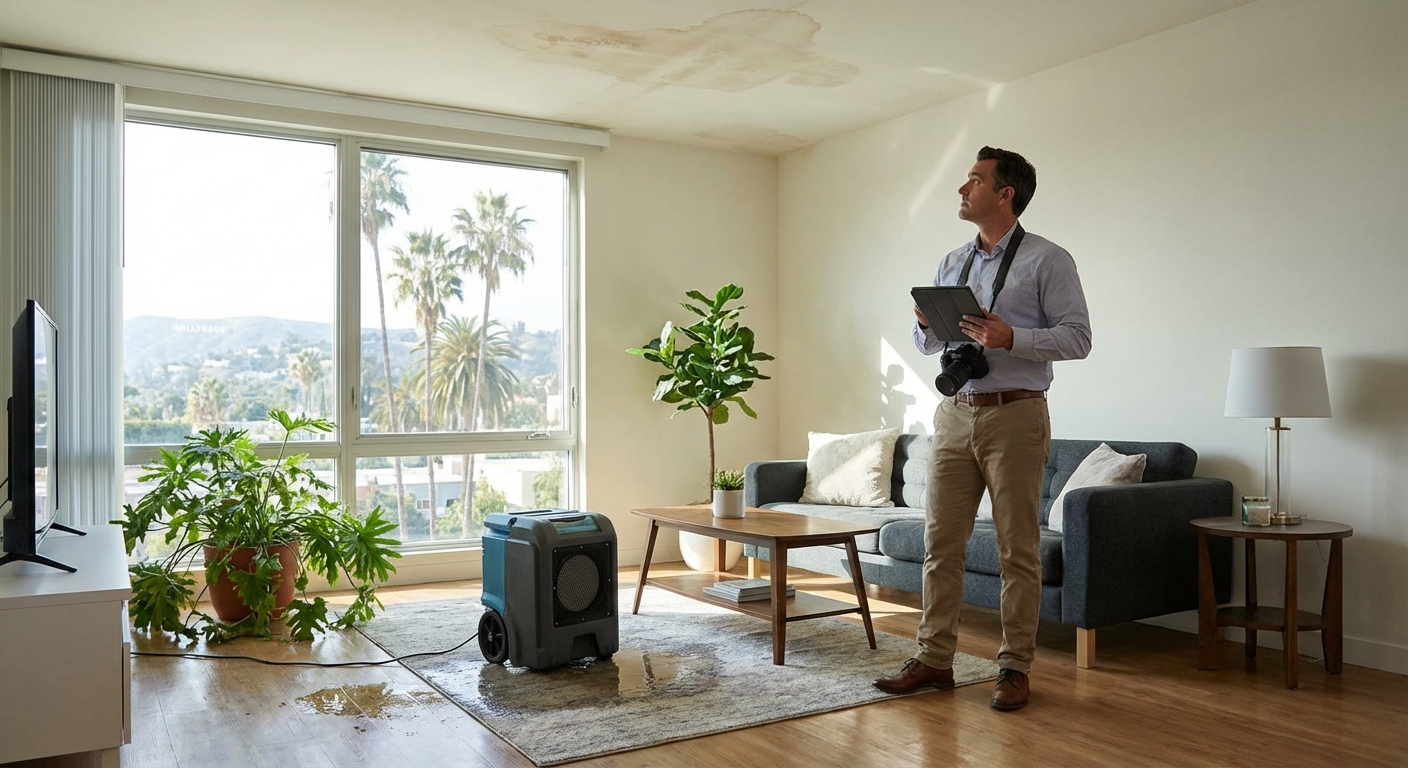
Think about it. A burst pipe in the wall, a sudden leak from an upstairs neighbor’s overflowing tub, or even heavy rains that find their way through a faulty window seal – these aren’t just minor inconveniences. They can ruin your belongings, make your apartment unlivable for a while, and leave you wondering who’s going to pay for the mess. It’s a heavy thought, but it’s one we need to face head-on.
What Your Renters Policy *Does* Cover When Water Strikes
The short answer is yes, renters insurance *can* be a lifesaver when water damage hits. The real answer is more complicated, of course, because insurance always is. But generally, a standard renters policy in California comes with a few key protections that are designed for exactly these kinds of emergencies.
First up, there’s your personal property. This is the stuff that makes your apartment feel like home – your furniture, clothes, electronics, books, kitchenware, everything you own. If a covered peril, like a sudden burst pipe or an accidental overflow, damages these items, your renters insurance steps in. It helps pay to repair or replace them, up to the limits you choose when you buy the policy. Imagine a dishwasher hose failing, soaking your kitchen and dining room. Your policy would help you replace those waterlogged rugs and warped cabinet contents.
Then there’s liability coverage. This is often overlooked, but it’s incredibly important. What if *your* overflowing tub causes water to leak into the apartment below you, damaging their ceiling and their antique lamp? Suddenly, you’re not just dealing with your own mess; you’re potentially on the hook for someone else’s. Your liability coverage would help pay for those damages, and even cover legal fees if they decided to sue you. It’s a protective shield, plain and simple.
But wait – there’s also “loss of use” or “additional living expenses.” What happens if the water damage is so severe that you can’t live in your apartment for a week or two while repairs are made? This coverage helps pay for things like a hotel stay, meals out, or even laundry services beyond what you’d normally spend. It’s about easing the burden during a truly stressful time.

The Catch: What Renters Insurance Usually *Doesn’t* Cover for Water
Here’s the rub. While renters insurance is great for many types of water damage, it’s not a magic bullet for everything. Knowing these distinctions can save you a lot of heartache later.
Most standard policies won’t cover damage from floods. We’re talking about water that comes from outside, rising from the ground, like a swollen river or heavy rain accumulating in the street. Even in the dry Inland Empire, flash floods can happen. For that, you’d need a separate flood insurance policy, typically purchased through the National Flood Insurance Program (NFIP). It’s a big difference.
Another common exclusion is damage from sewer backups or sump pump failures. Picture this: your toilet overflows, not because of a clog in your unit, but because the main sewer line backs up into your apartment. That’s a nasty situation, and standard renters policies often don’t cover it. You can usually add an endorsement – basically, an extra bit of coverage – to your policy for this, and honestly, it’s often worth considering.
Which brings up something most people miss. Renters insurance also won’t cover damage to the building itself. That’s your landlord’s responsibility. If a pipe bursts and ruins the drywall and flooring, your landlord’s insurance pays for those structural repairs. Your policy is strictly for *your* stuff and *your* liability. It’s a crucial distinction, one that often causes confusion.
California’s Quirks: Water, Weather, and Your Policy
California is a land of extremes, isn’t it? One year we’re in a historic drought, the next we’re bracing for “atmospheric rivers” that dump feet of rain. These changing weather patterns can put a lot of strain on aging infrastructure, leading to more burst pipes and leaks.
Consider the recent shifts. After years of dry spells, pipes can become brittle. Then, when heavy rains come, or even just temperature fluctuations, those pipes are more susceptible to failing. You might live in an older building in Los Angeles or a newer complex in Sacramento, but faulty plumbing can strike anywhere.
But here’s the thing. Your policy generally covers sudden and accidental water damage. That means a pipe that suddenly bursts, or a washing machine hose that unexpectedly gives out. It usually won’t cover damage that happens gradually over time – like a slow, unaddressed leak under the sink that eventually rots the cabinet. Why? Because insurance companies see that as preventable, something that should have been fixed. That’s not always easy to prove, of course, and sometimes those slow leaks are hidden, but it’s a standard clause to be aware of.
How to Talk to Your Agent About Water Damage
It can feel overwhelming, trying to sort through all the jargon and figure out what you actually need. Many people feel intimidated by insurance, like it’s a language they don’t speak. That’s perfectly normal. But when you’re talking about your home and your belongings, you really want to feel confident in your coverage.
When you’re looking for renters insurance in California, especially if you’re worried about water damage, ask specific questions. Don’t just say, “Does it cover water damage?” Instead, ask:
* “Does my policy cover damage from a burst pipe in my apartment?”
* “What about if my neighbor’s dishwasher leaks into my unit?”
* “Is sewage backup covered, or do I need an endorsement for that?”
* “If I have to move out because of water damage, what does ‘loss of use’ actually pay for?”
Honestly, a good agent won’t just rattle off answers. They’ll listen to your concerns and explain things in plain language. Karl Susman at **LA Renters Insurance** has been helping Californians with these exact questions for years. He understands the unique challenges of living here, from the specific risks in the Valley to the complexities of policies from State Farm, AAA, or Farmers. You can reach out to him at (877) 411-5200 for a conversation that makes sense.
Making Sense of Your Policy: Deductibles and Replacement Costs
Once you decide on a policy, you’ll encounter two more terms that matter a lot for water damage claims: your deductible and whether your policy offers actual cash value (ACV) or replacement cost value (RCV).
Your deductible is the amount of money you have to pay out of pocket before your insurance coverage kicks in. If you have a $500 deductible and a burst pipe causes $3,000 worth of damage to your belongings, you’d pay the first $500, and your insurance would cover the remaining $2,500. Choosing a higher deductible usually means a lower monthly premium, but it also means you pay more if you have a claim. It’s a balancing act.
Then there’s ACV versus RCV. This is a big one. Actual Cash Value pays you for the depreciated value of your items. That means if your five-year-old laptop gets waterlogged, ACV would pay you what that five-year-old laptop is worth *today*, not what it costs to buy a brand new one. Replacement Cost Value, on the other hand, pays you what it would cost to buy a brand new, comparable item. Most people prefer RCV because it means you can actually replace your damaged items without reaching deeper into your own pocket. It makes a huge difference in the outcome of a claim.
Protecting your belongings and your peace of mind doesn’t have to be a headache. Understanding what your renters insurance does – and doesn’t – cover for water damage is a huge step towards feeling secure in your California rental.
Ready to explore your options for renters insurance in California? It’s smarter to be prepared than to be caught off guard. You can get a personalized quote and speak with an expert like Karl Susman at LA Renters Insurance, CA License #OB75129, by visiting https://susmaninsurance.com/get-a-quote/.
Common Questions About Water Damage & Renters Insurance
Q: Does my landlord’s insurance cover my belongings if there’s water damage?
A: No, almost never. Your landlord’s insurance covers the building structure itself and their liability. It does not cover your personal property (furniture, clothes, electronics, etc.) if they’re damaged by water. That’s why renters insurance is so important for tenants.
Q: What if the water damage is caused by my own negligence, like leaving a faucet running?
A: Generally, renters insurance *does* cover sudden and accidental damage, even if it’s due to your own oversight. If you accidentally leave a faucet running and it floods your bathroom, your policy would likely cover the damage to your personal property. It would also cover your liability if the water leaked into another unit.
Q: Is mold from water damage covered by renters insurance?
A: This gets tricky. Most policies will cover mold *if* it results from a covered peril (like a sudden burst pipe) and is discovered and remediated quickly. However, mold that develops from a long-term, unaddressed leak or from general humidity issues is often excluded. It’s best to report any water damage immediately to prevent mold growth and ensure coverage.
Q: How quickly do I need to report water damage to my insurance company?
A: As soon as possible! Most policies require prompt notification. Delays can complicate your claim, especially if the damage worsens over time or leads to mold. Document everything with photos and videos immediately after you discover the damage.
Q: Should I get actual cash value or replacement cost value for my personal property coverage?
A: For most people, Replacement Cost Value (RCV) is the better choice. It pays you the cost to buy new, comparable items, rather than the depreciated value of your old ones. While RCV might lead to a slightly higher premium, it offers much better protection and peace of mind when you actually need to replace damaged belongings.
Don’t wait for that dreaded drip to start thinking about your coverage. Take a few minutes to understand your options and secure your peace of mind. Get a no-obligation quote from LA Renters Insurance, CA License #OB75129, by visiting https://susmaninsurance.com/get-a-quote/ or calling Karl Susman directly at (877) 411-5200.
This article is for informational purposes only and does not constitute financial advice.