When Home Disappears: The Unsung Hero of Renters Insurance
Imagine this: The smell of smoke still hangs heavy in the air. Not from your place, thank goodness, but from a neighbor’s apartment. Firefighters are packing up. Your landlord just delivered the news – the building’s uninhabitable for weeks, maybe months. A pipe burst in the unit above yours, flooding everything. Or maybe a big earthquake just rocked Southern California, leaving your rental tagged red.
Where do you go? What do you do? Most folks think about their stuff. They picture their couch, their TV, their clothes. That’s what renters insurance is for, right? To replace your belongings if they’re damaged or stolen. And yes, it absolutely does that. But there’s a lesser-known, often overlooked part of that policy, especially important here in California, that can save you from a true nightmare: loss of use coverage.
This isn’t about replacing your favorite armchair. This is about replacing your *home* when it’s suddenly taken away. It’s about finding somewhere to sleep, somewhere to eat, and keeping life moving when your usual four walls are off-limits. For many California renters, from the busy streets of Ventura County to the quiet neighborhoods of the Inland Empire, this coverage is the difference between a bad situation and a financial freefall.
What Exactly Is “Loss of Use” Anyway?
Think of it as your policy stepping in to cover the extra costs you rack up when you can’t live in your rental because of a covered event. It’s also called “Additional Living Expenses,” or ALE. Say a fire starts in the apartment next door, making your unit unlivable due to smoke damage. Your landlord still expects rent, but you can’t stay there. That’s where ALE kicks in.
It helps pay for things like a hotel room, a temporary rental apartment, or even the extra gas money if you have to crash on a friend’s couch across town for a while. It covers the increased cost of food, because suddenly you’re eating out every meal instead of cooking at home. Laundry? You’ll pay for that too. Pet boarding, if Fluffy can’t come to the hotel. All those unexpected bills that pile up fast when you’re displaced.
Honestly, it’s a lifesaver. Especially here, where everything costs more. A hotel room for a week in Los Angeles? You’re looking at hundreds, if not thousands, of dollars. Eating out for three meals a day? Your grocery budget will look like a distant memory. Without this coverage, most people just don’t have that kind of cash sitting around for an emergency.

California’s Unique Risks and the Cost of Displacement
We live in a beautiful, but sometimes dramatic, state. Earthquakes are a constant low hum. Wildfires, particularly across the canyons and foothills, are a yearly concern. Floods can hit coastal areas and valleys. These aren’t just abstract threats; they’re real possibilities that can force you out of your home without warning.
Consider the wildfires we’ve seen. If your apartment building is evacuated, or worse, damaged by smoke or embers, you might be out for weeks. Or imagine a major shaker, like the one we’re always told is coming. Even if your building doesn’t collapse, it might be red-tagged for safety inspections for a long time. Where do you go then?
The cost of living here is already astronomical. Trying to find a temporary place while still paying rent on your damaged apartment, *and* replacing your belongings, *and* covering daily expenses? It’s a recipe for disaster. Karl Susman, from LA Renters Insurance, CA License #OB75129, has seen it firsthand. “People often focus on replacing their stuff, and that’s important,” he explains. “But the real shock comes when they realize how much it costs just to *live* for a month or two without their home. That’s where loss of use truly shines.”
How Much Coverage Do You Really Need?
This isn’t a one-size-fits-all answer. Most renters insurance policies offer loss of use coverage as a percentage of your personal property coverage – often 20% or 30%. So, if you have $30,000 in personal property coverage, you might have $6,000 or $9,000 for additional living expenses.
But here’s the thing: Is that enough for a month or two in a temporary apartment in Santa Monica? Probably not. An extended stay hotel in San Diego? Maybe. It really depends on your current lifestyle and where you live. Some policies offer a specific dollar amount, like $10,000 or $15,000, or a time limit, say 12 months.
When you’re looking at policies, don’t just glance at that number. Think about your daily expenses. What’s your average monthly food bill? How much would a comparable temporary rental cost in your area? Add in laundry, transportation, even things like internet access if you need to work from your temporary spot. It adds up fast.
It’s a good idea to talk through these scenarios with an expert. They can help you figure out what a realistic amount looks like for your particular situation. Getting this right means you’re not scrambling when disaster strikes.
Making a Claim: What to Expect
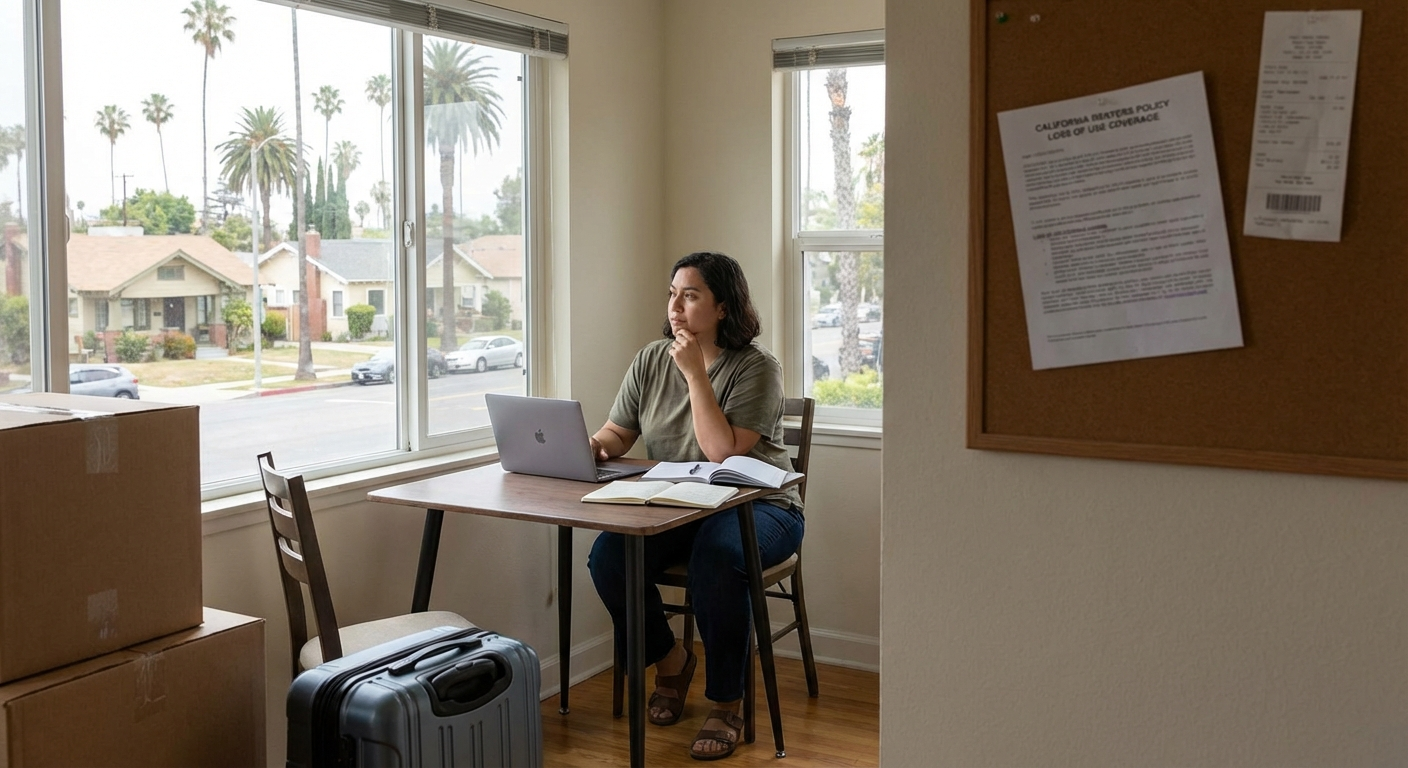
Okay, so you’re displaced. The first thing to do, after making sure everyone is safe, is to contact your insurance company. They’ll walk you through the process. They’ll need details about the incident and confirmation that your rental is indeed uninhabitable due to a covered peril.
Which brings up something most people miss: Keep all your receipts. Every single one. That hotel bill, the takeout orders, the gas receipts for extra commuting, even the dog walker you had to hire. The insurance company won’t just hand you a lump sum; they reimburse you for *actual* expenses that are *above and beyond* your normal living costs.
So, if you normally spend $500 a month on groceries, and now you’re spending $1,500 eating out, the policy generally covers the extra $1,000. It doesn’t pay your normal rent, remember. You still owe that to your landlord. But it pays for the *additional* costs of living elsewhere.
The Fine Print: Earthquakes, Floods, and Other California Nuances
This is where it gets interesting. Standard renters insurance policies typically *exclude* damage from earthquakes and floods. Meaning, if an earthquake makes your apartment unlivable, your loss of use coverage won’t kick in unless you’ve added specific earthquake or flood endorsements to your policy.
For many California residents, especially those in seismic zones or near flood-prone rivers, adding these endorsements is non-negotiable. It adds to your premium, sure, but the peace of mind is priceless. Imagine having loss of use coverage, but it’s useless because the reason you were displaced isn’t covered. Big difference.
Also, be aware of your deductible. Most renters policies have one. This is the amount you pay out-of-pocket before your insurance kicks in. It applies to loss of use claims too. If your deductible is $500 and your additional living expenses are $2,000, the insurer will pay $1,500.
Want to learn more about protecting yourself in California? Karl Susman and his team at LA Renters Insurance, CA License #OB75129, can help you understand the specifics of renters insurance in our state. Find out how much coverage you might need and get a personalized quote today.
Get a Renters Insurance Quote Here!
Don’t Just Assume You’re Covered
Too many renters get a policy because their landlord requires it, or they just want basic coverage for their laptop and clothes. They sign up, often with a major carrier like State Farm, AAA, or Farmers, and then just forget about it. That’s a mistake.
Truly understanding your policy, especially the loss of use section, is essential. It’s not just about what you own; it’s about your ability to maintain some semblance of normal life when your home is taken away. In California, where housing is tight and costs are high, finding a sudden temporary place can be a huge burden. This coverage is your safety net. It allows you to focus on recovery, not on where your next meal is coming from or if you can afford another night at the motel. It’s often the most valuable part of a renters policy when you truly need it.
Thinking about your options? Don’t wait until you’re staring at an uninhabitable apartment. It’s always better to be prepared.
Click Here to Get Your Renters Insurance Quote Now!
Frequently Asked Questions About Loss of Use Coverage
Q: Does loss of use coverage pay my rent?
A: No, loss of use coverage (or Additional Living Expenses) does not pay your regular rent. You’re still obligated to pay your landlord for your rental. What it does cover are the *extra* expenses you incur because you’re displaced from your home, like the cost of a hotel or temporary rental above your usual rent, additional food costs, and other necessary expenses.
Q: How long does loss of use coverage last?
A: The duration of loss of use coverage varies by policy. It’s usually limited by either a specific dollar amount (e.g., $10,000) or a time limit (e.g., 12 or 24 months), whichever comes first. It’s designed to cover you for a reasonable period until your rental is repaired or you find a new permanent home. Always check your policy declarations for your specific limits.
Q: What if I stay with family or friends? Can I still claim loss of use?
A: If you stay with family or friends, you might still be able to claim some additional living expenses. For example, your policy could cover the increased cost of food because you’re eating out more, or extra transportation costs. Some policies even offer a small “fair rental value” payout to the person you’re staying with, as a courtesy, though this isn’t standard across all policies. You won’t be reimbursed for hotel costs if you’re not staying in one, naturally.
Q: Is there a deductible for loss of use claims?
A: Yes, typically your renters insurance deductible will apply to loss of use claims, just like it would for personal property claims. This means you’ll pay your deductible amount out-of-pocket before your insurance company starts reimbursing you for your additional living expenses.
This article is for informational purposes only and does not constitute financial advice.