What You’ll Learn:
- How standard renters insurance covers your bicycle.
- The difference between Actual Cash Value and Replacement Cost for bikes.
- When to “schedule” your high-value bicycle for better protection.
- What to do if your bike is stolen or damaged.
- California-specific factors that impact your bike coverage.
Step 1: Grasping Renters Insurance Basics
Most people think renters insurance is just for your couch or TV. And sure, it covers those things if a pipe bursts or your apartment building catches fire. But it’s actually a lot broader than that. It protects your personal stuff, no matter where it is, in many situations. That includes your bike.
Honestly, a lot of folks in places like Ventura County or right here in the Valley don’t bother with renters insurance. They figure their landlord’s policy covers everything. Not true. Your landlord’s policy protects the building itself – the walls, the roof, the appliances they own. Your stuff? That’s on you.
Your Personal Property, Covered
Think of everything you own. Clothes, electronics, furniture, books. Your bike. All of that falls under “personal property.” Renters insurance policies typically have a total limit for this property — say, $20,000 or $30,000. That’s the maximum amount the insurer, like State Farm or AAA, would pay out if all your stuff vanished in a covered event.
But here’s where it gets interesting. Most policies also have “special limits” for certain types of items. Jewelry might have a $1,500 limit. Cash, maybe $200. And yes, bicycles often fall into this category, or at least they can be tricky. A standard policy might only pay out $1,000 or $2,500 for a bike, even if your overall personal property limit is much higher. That’s a big difference if you’re riding a fancy carbon fiber road bike that cost you five grand.

Actual Cash Value vs. Replacement Cost: A Big Difference
This is probably the most confusing part for new renters. You’ll hear about Actual Cash Value (ACV) and Replacement Cost Value (RCV). They sound similar, but they’re not. Not even close.
Actual Cash Value means the insurer pays you what your item was worth right before it was lost or damaged. Think depreciation. Your bike might have cost $2,000 new, but if it’s three years old, it’s probably only worth $1,200 or $1,500 on the used market. That’s what you’d get back with ACV coverage, minus your deductible.
Replacement Cost Value, on the other hand, pays you what it would cost to buy a brand-new, similar item today. That $2,000 bike, even if it’s three years old, would get you enough to buy a new $2,000 bike. See the difference? It’s huge, especially for items that lose value quickly, like electronics or, you guessed it, bicycles. Always, always try to get Replacement Cost Value coverage if you can. It usually costs a little more, but it’s worth every penny when it comes time to make a claim.
Step 2: How Your Bicycle Fits into the Picture
So, you’ve got your renters insurance. Your bike is covered, right? The short answer is yes. The real answer is more complicated.
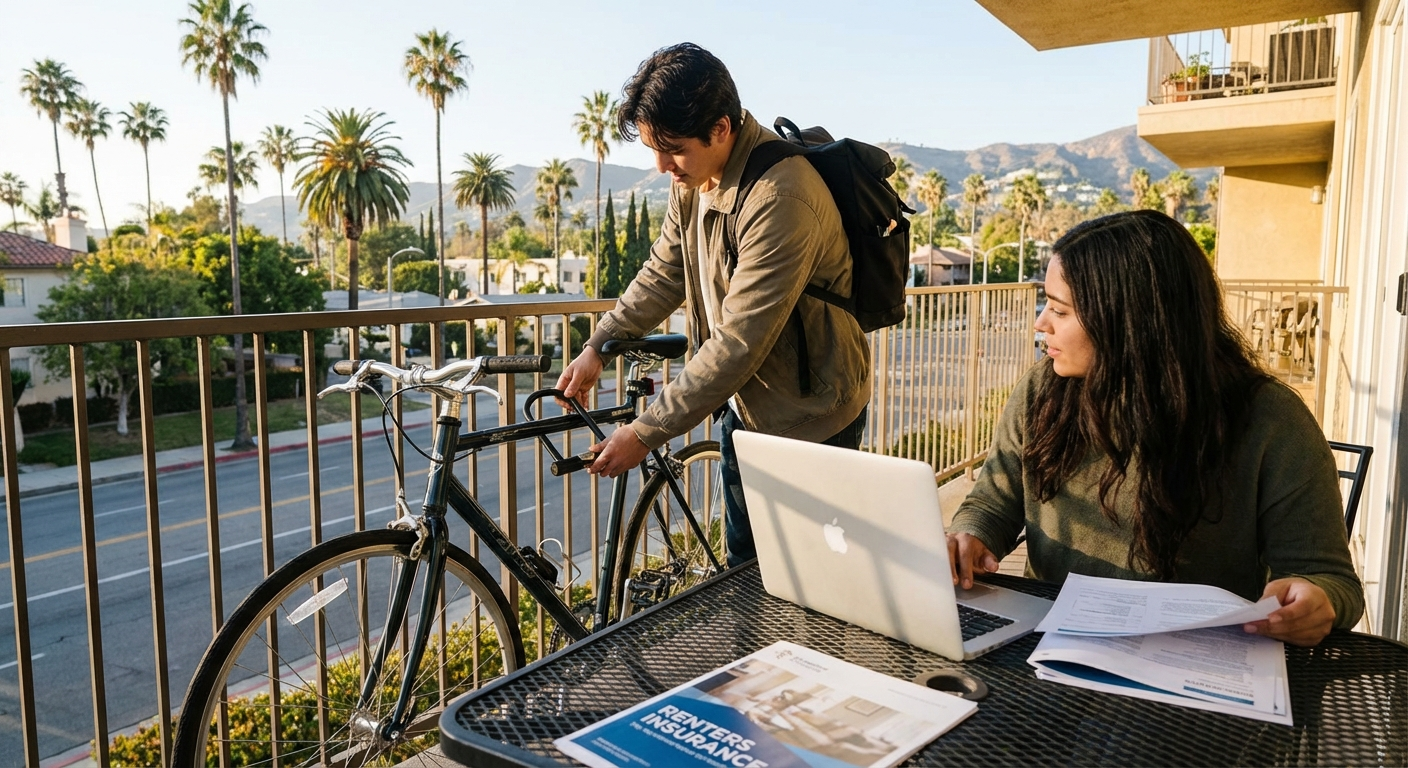
Your bike is generally considered personal property. If it’s stolen from inside your apartment, or damaged in a fire, your renters policy should kick in. But what if it’s stolen from the bike rack outside your office in downtown San Diego? Or from a cafe patio in Silver Lake? Good news: most renters policies cover your personal property even when it’s away from home. That’s a huge plus for cyclists.
Standard Coverage Limits: What They Actually Mean
As we touched on, while your total personal property coverage might be $25,000, there’s often a specific, lower limit for bikes. This “special limit” could be anywhere from $1,000 to $2,500, depending on your insurer and policy. If your bike is worth less than that, you’re probably fine with standard coverage.
But what if your bike is a high-end electric bike, or a custom road bike you’ve poured thousands into? Many bikes today easily cost $3,000, $5,000, or even more. If your policy only covers $1,500, you’re out a significant chunk of change if it disappears. This is a common pitfall for cyclists who don’t dig into their policy details.
Theft and Damage Scenarios: Inside, Outside, and Away
Let’s look at some common situations:
- Stolen from your locked apartment: Covered.
- Stolen from your building’s secured bike room: Likely covered.
- Stolen from a bike rack outside your work in Irvine: Covered, because personal property is covered “off-premises.”
- Damaged in a car accident while you’re riding it: Covered, but only for the damage to the bike itself, not your medical bills or damage to the car.
- Damaged by a fire in your apartment: Covered.
There are always exceptions, of course. If you leave your bike unlocked in a public place, some policies might deny the claim, arguing you didn’t take reasonable steps to protect it. Always lock it up, and make sure you use a good lock.
Step 3: Boosting Your Bike’s Protection
If your bike is worth more than the standard policy’s special limit, you’ll want to take an extra step. It’s called “scheduling” an item, or sometimes adding a “personal articles floater” or “endorsement.”
The Power of Scheduling: When Your Bike is More Than Just a Bike
Scheduling your bike means you list it specifically on your policy, along with its exact value. You’ll typically need to provide a receipt or an appraisal. When you schedule an item, it usually bypasses those lower special limits and gets its own, higher coverage amount. Plus, scheduled items often have a lower deductible — or even no deductible at all — and broader coverage for things like accidental damage.
For example, if you have a $6,000 Specialized bike, you’d schedule it for $6,000. If it gets stolen, you’d get the full $6,000 (minus a small or no deductible, depending on the policy). This is a game-changer for serious cyclists. Insurers like Farmers or Mercury often offer these options. It adds a bit to your premium, but for peace of mind, it’s often worth it.
Unscheduled Coverage: What Happens to Bikes Not Listed Separately
If you don’t schedule your bike, it falls under your general personal property coverage, subject to the special limits we discussed. So, if you have a few bikes, and only one is truly high-value, you might schedule that one and let the others fall under the standard limits. That’s a perfectly valid strategy for many riders in the Inland Empire or elsewhere.
But wait — what about e-bikes? Some insurers are starting to treat them differently than regular bicycles, sometimes requiring them to be scheduled due to their higher value and specific components. Always ask your agent about how e-bikes are handled.
Step 4: Making a Claim: When Things Go Wrong
Nobody wants to file a claim. It means something bad happened. But if your bike is stolen or damaged, knowing the steps can make a stressful situation a lot smoother.
First Steps After Theft or Damage
If your bike is stolen, the absolute first thing you need to do is file a police report. Do it immediately. Your insurance company will almost certainly require a police report number before they’ll even consider your claim. Make sure to get a copy of the report, or at least the report number and the contact information for the precinct.
For damage, take photos of the damage as soon as possible. Don’t try to fix it before you document it. If it happened in a specific event, like a fall, make notes about the circumstances.
Gathering Proof: Photos, Receipts, and Reports
This is where good record-keeping pays off. For any valuable item, especially a bike, you should have:
- The original purchase receipt.
- Photos of the bike, especially close-ups of any unique features or serial numbers.
- A record of the serial number (often found on the bottom bracket).
- Any appraisal documents if you scheduled the bike.
The more proof you have of ownership and value, the easier your claim will be. Without a serial number, proving the bike was yours and not just a generic bike can be surprisingly hard.
Navigating Deductibles and Payouts
Once you file a claim, your insurer will assign a claims adjuster. They’ll review your documentation, the police report (if applicable), and your policy. Remember your deductible? That’s the amount you have to pay out of pocket before your insurance kicks in. If your deductible is $500 and your bike was worth $1,500, you’d get $1,000 back (assuming it’s RCV coverage and no special limits apply).
If you scheduled your bike, the deductible might be lower or even zero. This is another reason scheduling is so helpful for high-value items. Payouts can take a few weeks, sometimes longer, especially if there’s a lot of back-and-forth about value or circumstances.
Step 5: California Specifics You Can’t Ignore
Living in California is amazing, but it also comes with its own set of challenges, especially for insurance. Bike theft, for instance, is a serious problem in many urban areas across the state.
The Golden State’s Unique Risks: Theft, Fires, and More
Walk around San Francisco, downtown Los Angeles, or even college towns like Berkeley or Santa Cruz, and you’ll hear plenty of stories about bike theft. It’s a real and present danger. Having robust renters insurance with good bike coverage isn’t just a nice-to-have here; it’s a necessity.
Which brings up something most people miss. Beyond theft, California faces increasing risks from wildfires. If you live in an area prone to fires, like parts of Malibu or even the foothills of the Sierra Nevada, your bike could be lost in a structure fire. Your renters insurance would cover that, too, subject to your policy limits. The FAIR Plan, California’s insurer of last resort, covers some basic perils, but it’s often wise to seek a standard policy first for broader coverage.
Finding the Right Policy and Agent in CA
California’s insurance market has seen some changes recently. Premiums for all types of property insurance have been on the rise, and some insurers are pulling back from certain areas due to wildfire risk. This means shopping around is more important than ever.
You don’t just want any policy; you want the right policy for your specific needs, especially if you have an expensive bike. This is where a knowledgeable, local insurance agent makes all the difference. Someone who understands the nuances of the California market, the common pitfalls, and which carriers offer the best solutions for cyclists.
For folks in California looking for solid advice on renters insurance and how to protect their beloved bikes, Karl Susman at LA Renters Insurance is a go-to expert. He’s been helping Californians for years, and his agency (CA License #OB75129) can walk you through all the options. You can reach them at (877) 411-5200 for a personalized discussion.
Don’t wait until your bike vanishes to figure out your coverage. Get ahead of it. Understanding your policy is the first step to truly protecting your assets. If you’re ready to explore your options and get a quote tailored to your California lifestyle and your bike, you can start the process right now. Get a renters insurance quote today!
It’s not just about covering your stuff; it’s about covering your peace of mind. Knowing that your prized two-wheeler is protected, whether it’s locked up at home or out on the trails of Griffith Park, lets you enjoy riding without that nagging worry. If you’re curious about specific policy details or want to see how affordable comprehensive coverage can be, don’t hesitate. Click here to get your renters insurance quote and ensure your bicycle is properly covered.
Frequently Asked Questions About Bicycle Coverage
Can I get coverage for my bike if I use it for competitive racing?
Maybe. Standard renters insurance usually covers personal use. If you’re racing professionally or semi-professionally, you might need a specialized policy or an endorsement that specifically covers competitive use. Always disclose this to your agent; otherwise, a claim could be denied.
What if my bike is stolen from my car? Is it still covered?
Yes, generally. Your renters insurance covers your personal property wherever it is, including inside your car. However, if your car itself is stolen or broken into, your auto insurance would cover the car, while your renters insurance would cover your bike and any other personal items inside.
Does renters insurance cover damage from riding accidents?
It depends on the policy and how the damage occurred. If you crash your bike and it gets bent, some policies might cover the damage under their personal property section, especially if it’s a scheduled item. But your renters insurance won’t cover your medical bills or liability if you injure someone else or damage their property while riding – that’s where health insurance and potentially a separate liability policy would come in.
Is there a specific “bike insurance” policy I should consider instead of renters insurance?
For very high-value bikes (think $10,000+), or if you have unique needs like competitive racing or extensive travel with your bike, a dedicated bicycle insurance policy might offer more specialized and comprehensive coverage than a renters policy. These policies often cover things like crash damage, race coverage, and even replacement bike rental. For most casual to serious riders, however, a well-structured renters policy with a scheduled endorsement is usually sufficient and more cost-effective.
***
This article is for informational purposes only and does not constitute financial advice.