Moving In California: Does Your Rental Home Change Your Insurance?
Maya and Ben had just sealed the deal on their new rental house in Highland Park. After years in a cozy Silver Lake apartment, the idea of a yard, an extra bedroom, and a bit more space felt like hitting the jackpot. They’d already packed countless boxes, argued mildly over whose “vintage” concert posters really needed to come along, and even started dreaming about where the new grill would go. But then Ben remembered something.
“Hey,” he said, holding up a phone with a browser open. “We need renters insurance, right? It’s mandatory for this place.”
Maya nodded. “Yeah, our old landlord required it too. But is it… different for a house? We had a small apartment policy. Does a whole house mean a whole new kind of coverage?”
It’s a fair question. Many Californians, just like Maya and Ben, assume renters insurance is a one-size-fits-all thing. You rent, you get a policy. Simple. But the truth, especially in a diverse state like ours, is a bit more textured. The short answer is yes, you absolutely need it for both. The real answer about how different the policies are, and what you should look for, is more complicated.
What Renters Insurance Actually Covers (And Doesn’t)
First off, let’s clear up a common misunderstanding. Renters insurance doesn’t protect the actual building you live in. That’s your landlord’s job. Their policy, often called a dwelling fire or hazard policy, covers the structure itself – the roof, the walls, the foundation. What your renters policy *does* cover is basically everything else that matters to you.
Think about the three big buckets:
* **Your Stuff (Personal Property):** This covers your clothes, furniture, electronics, dishes, everything you own inside the rental. If a pipe bursts in your apartment or a fire starts in your house, your policy helps replace what’s lost or damaged.
* **Liability Protection:** This is huge. If someone gets hurt at your rental – say, your friend trips over a rug at your housewarming party, or your dog nips the mail carrier – your policy can cover their medical bills and legal fees if they sue you. Even if it’s not your fault, defending yourself in court costs money.
* **Additional Living Expenses (Loss of Use):** What if your rental becomes unlivable after a covered event, like a fire or a major water leak? This part of your policy pays for temporary housing, food, and other necessary expenses while your place is being repaired. It means you won’t be sleeping in your car or racking up huge hotel bills.
Now, whether you’re in an apartment or a house, these core protections remain. But here’s where it gets interesting.

The Apartment Angle: Shared Walls, Shared Risks?
Living in an apartment often means you’re sharing walls, floors, and ceilings with neighbors. And that brings its own set of risks. Consider Maya and Ben’s old place in Silver Lake.
One time, the folks upstairs had a bathtub overflow. Water started dripping through Maya and Ben’s ceiling, soaking their rug and a bookshelf full of rare books. Their renters policy would’ve stepped in to cover the damage to their personal property, even if the leak originated from someone else’s unit.
Apartment complexes also often have shared amenities – laundry rooms, gyms, pools. While your liability usually doesn’t extend to injuries in these common areas (that’s often the landlord’s responsibility), the close proximity can sometimes increase the chance of something affecting your unit. A fire in a neighboring unit, for instance, can quickly spread. Or a break-in in the building might make your unit a target too.
The House Angle: More Space, More Responsibility?
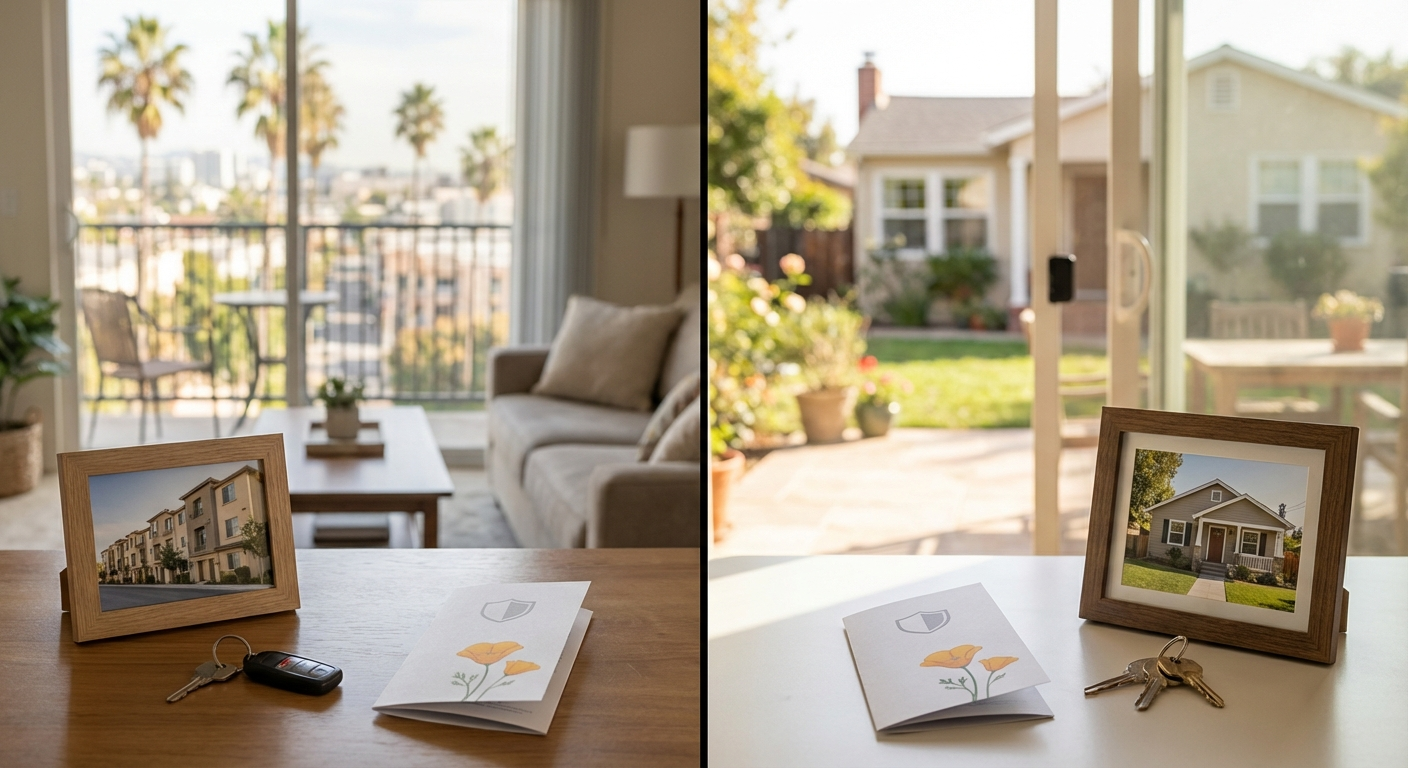
Moving into a rental house like Maya and Ben did in Highland Park feels different. You often have more space, maybe a yard, and usually fewer direct neighbors right above or below you. But that doesn’t mean fewer risks. Sometimes, it means *different* risks, or at least risks with a bigger potential price tag.
For instance, Ben was already picturing hosting barbecues in their new backyard. What if a guest trips over a sprinkler head in the yard and breaks an ankle? The liability coverage on their renters policy would be essential. A house often means more entry points for potential burglars – more windows, more doors. And with more space, people often accumulate more belongings. Maya and Ben probably had more furniture, more tools for the yard, and certainly more “stuff” in their house than in their apartment. This means they likely needed higher personal property coverage limits.
That’s not the whole story. Houses in California, especially older ones, can come with their own maintenance quirks. Think about aging pipes, or an old water heater. If a pipe bursts and floods your rental house, not only is your personal property at risk, but you might need to find temporary housing for longer if repairs are extensive.
What Really Drives Your Premium (It’s Not Just the Walls)
So, if the core coverage is similar, why might the cost or the ideal policy limits change when you move from an apartment to a house? It mostly boils down to three big factors, none of which are exclusively tied to the type of dwelling.
Location, Location, Location — And Wildfires
Where you live in California matters. A lot. Premiums for renters insurance, just like homeowners, can be higher in areas with a greater risk of natural disasters. If Maya and Ben had moved to, say, Ventura County or parts of the Inland Empire closer to brush, their policy might be affected by wildfire risk. Even as renters, if your house is in a high-risk fire zone, that can influence costs. Insurers like State Farm, AAA, and Farmers definitely look at these geographical risks.
Remember the devastating fires that sweep through parts of California? Even if your rental isn’t directly in the path of the flames, smoke damage can be an issue. Or, if a large area is evacuated, your additional living expenses coverage becomes crucial. The changing wildfire landscape – and changes to programs like the FAIR Plan – directly impact how insurers price risk, even for renters.
Your Stuff: How Much Is It Really Worth?
This is probably the biggest difference for most people moving from a smaller apartment to a larger house. More space usually means more stuff. And that stuff can add up fast.
Maya and Ben might have had $25,000 worth of belongings in their one-bedroom apartment. But now, with a bigger living room, a dining area, a second bedroom, and a backyard full of patio furniture, that number could easily jump to $50,000 or even $75,000. Underinsuring your personal property is a common mistake. Imagine losing everything in a house fire and realizing your coverage only pays for half of what you owned. That’s a gut punch.
When you’re comparing policies, think about replacement cost versus actual cash value. Replacement cost pays you what it would cost to buy a brand-new version of your lost items. Actual cash value pays you the depreciated value – what your old sofa was worth *at the time of the fire*, not what a new one would cost. Always go for replacement cost if you can afford it.
The Liability Question
The amount of liability coverage you carry is another critical point, and it doesn’t necessarily change just because you’re in a house. But the *exposure* might. If you have a bigger space, you might entertain more. If you have a yard, there’s more potential for someone to get hurt. If you get a dog – and many rental houses allow pets where apartments don’t – that adds another layer of potential liability. Dog bites, for instance, are a significant source of liability claims.
Most policies start with $100,000 in liability coverage. But honestly? In California, with our high legal costs, that might not be enough. Karl Susman, a seasoned agent at LA Renters Insurance (CA License #OB75129), often advises clients to consider $300,000 or even $500,000 in liability protection. It usually adds very little to your premium but offers a massive boost in peace of mind. A quick phone call to (877) 411-5200 can help you figure out the right amount for your situation.
Finding the Right Fit for Your California Rental
Whether you’re apartment hunting in the Valley or settling into a rental home in Pasadena, the process for getting renters insurance is similar. You’ll need to estimate the value of your personal belongings, decide on your liability limits, and consider any add-ons.
Don’t Forget Earthquake Coverage
We live in California. Earthquakes are a reality. Your standard renters insurance policy *does not* cover damage from earthquakes. You need to purchase a separate endorsement for that. It’s often offered by the California Earthquake Authority (CEA), but some private insurers offer their own versions. It might seem like an extra cost, but when the big one hits, you’ll be glad you have it. Imagine your TV toppling over, your dishes shattering, or your furniture breaking – earthquake coverage helps replace those items.
Why an Agent Makes a Difference
Trying to figure out the right coverage, especially for something as seemingly straightforward as renters insurance, can be confusing. That’s where an independent insurance agent like Karl Susman comes in. They don’t work for just one company. They can shop around with multiple insurers – like those big names you know – to find the best policy that fits your specific needs and budget, whether you’re renting a studio in Santa Monica or a four-bedroom house in Sacramento. They understand the quirks of California insurance, from Prop 103 to local risks.
They can explain the fine print, help you accurately value your belongings, and make sure you’re not overpaying or, worse, underinsured. For Maya and Ben, talking to someone who knows the California market would be invaluable.
Ready to see what renters insurance might look like for your California home, apartment, or even a townhouse? It’s easier than you think to get a custom quote for your specific situation.
Get Your Renters Insurance Quote Today!
Don’t just guess at your coverage. Protect what matters to you.
Click here to get a personalized quote for California renters insurance.
Frequently Asked Questions About California Renters Insurance
- Is renters insurance mandatory in California?
No, California state law doesn’t *require* you to have renters insurance. But here’s the kicker: many landlords do. If your lease agreement says you need it, then you have to get it to live there.
- How much does renters insurance usually cost in California?
It varies widely, but it’s generally one of the most affordable types of insurance. Your premium depends on your location, the value of your belongings, your chosen deductible, and your claims history. We can’t give guaranteed rates, but it’s often surprisingly inexpensive for the protection it offers.
- Does renters insurance cover roommates?
Typically, no. A standard renters insurance policy usually only covers the named insured and their immediate family members living in the household. If you have roommates, they usually need to get their own separate renters insurance policy to protect their belongings and cover their own liability. Sometimes, an endorsement can be added, but it’s less common.
- What’s the difference between Actual Cash Value (ACV) and Replacement Cost Value (RCV) for personal property?
This is a big one. ACV pays you the depreciated value of your items – what they were worth right before they were lost or damaged. RCV pays you the cost to buy brand-new replacements for your lost items, without factoring in depreciation. RCV policies usually cost a little more, but they offer far better protection in the event of a total loss.
- Will my renters insurance cover my belongings if I travel?
Good news! Most renters insurance policies offer “off-premises” coverage. This means your personal belongings are protected against covered perils even when they’re not inside your rental unit – for example, if your laptop is stolen from a coffee shop, or your luggage gets lost or damaged while you’re on vacation. There are usually limits to this coverage, so check your policy details.
This article is for informational purposes only and does not constitute financial advice.