Working From Home in California? Don’t Forget Your Desk!
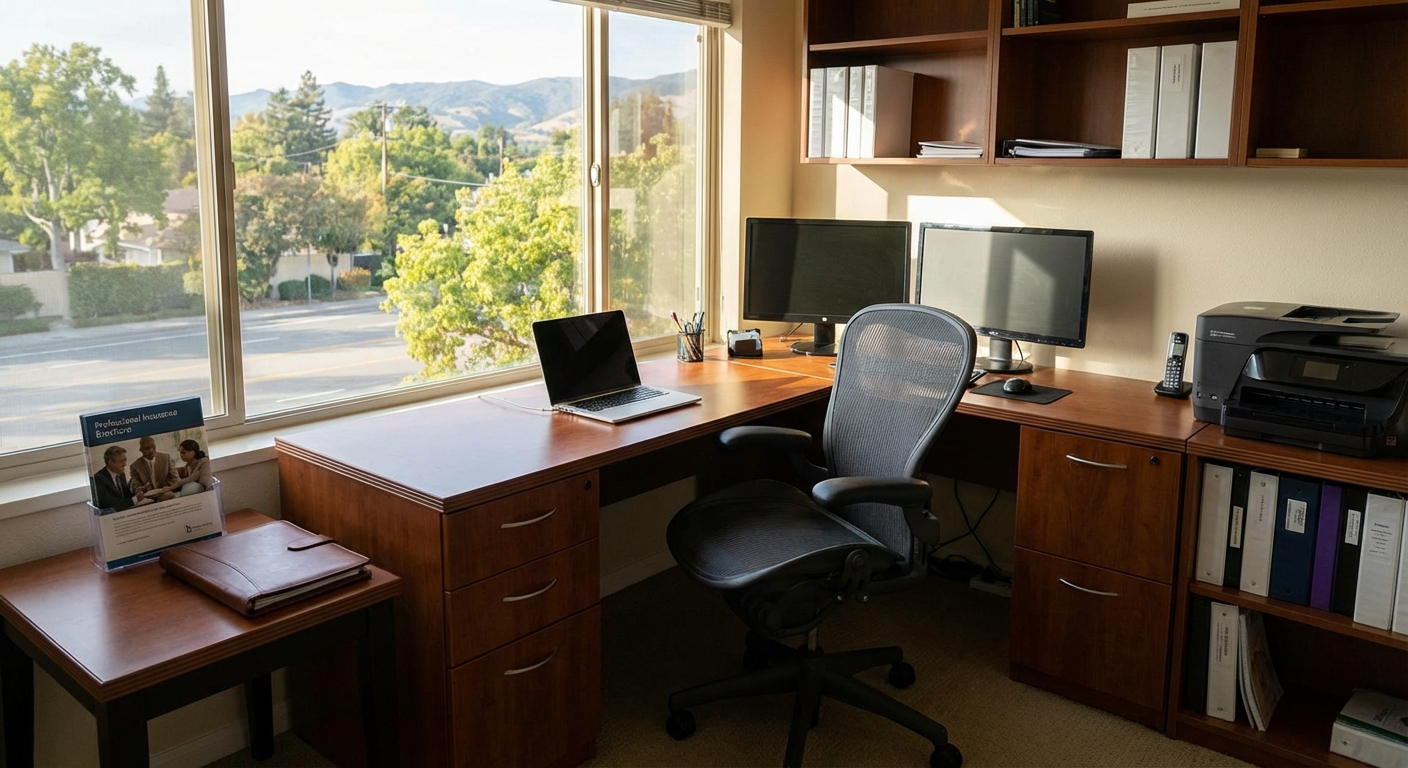
You’ve done it. You’ve set up that perfect home office, maybe in a spare bedroom in San Jose, or a cozy corner of your apartment in the Valley. You’ve got the dual monitors humming, the speedy Wi-Fi router, that fancy ergonomic keyboard, and probably a powerful laptop or desktop that cost a pretty penny. It’s your command center, the place where you build, create, or connect with clients all over California. It’s also probably full of some of your most valuable possessions. But here’s the thing: most renters policies aren’t automatically set up to fully protect all that gear.
Honestly, it’s a common oversight. Folks remember to insure their clothes, their furniture, maybe even their expensive bike. But that equipment you rely on daily for your livelihood? The stuff that makes it possible to skip the commute down the 405? That often slips through the cracks, or people assume it’s all covered just like their living room sofa. The short answer is yes, renters insurance can cover it. The real answer is a bit more complicated, especially when you start talking about business property.
Your Standard Policy: A Good Start, But With Limits
First, let’s get the basics straight. Renters insurance generally protects your personal belongings from a whole list of bad things: fire, theft, vandalism, certain water damage, and more. If a pipe bursts in your upstairs neighbor’s apartment in Santa Monica and ruins your laptop, your policy should kick in. If someone breaks into your place in the Inland Empire and snatches your monitor, you’d file a claim. That’s the core idea.
But when it comes to things you use for work, policies often have a specific carve-out. Many standard renters insurance policies put a cap on how much they’ll pay for “business property” or “property used for business purposes” when it’s located at your residence. This cap can be surprisingly low – sometimes only $1,500 or $2,500. Think about that for a second. Your laptop alone might cost more than that, let alone your printer, scanner, extra screens, specialized software, and all the other bits and bobs that make your home office tick. If you’re a freelancer, a remote employee, or running a small business from your apartment in Sacramento, that limit could leave you seriously underinsured.
Why the limit? Insurers see business property as having a different risk profile. There might be more foot traffic if clients visit, or the equipment could be more specialized and thus more attractive to thieves. Whatever the reasoning, it’s a rule you absolutely need to know.
Closing the Gap: Endorsements and Scheduled Property
So, what do you do if your home office gear is worth more than a few grand? You don’t just throw your hands up. You talk to your insurance agent about adding extra protection. This usually comes in two main flavors:
Increasing Your Business Property Limit
Many insurers offer what’s called an “endorsement” or “rider” that lets you increase that standard business property limit. Instead of $2,500, you might be able to get $5,000, $10,000, or even more. This is often the simplest and most common way to get better coverage for your general home office setup. It’s usually not a huge bump in your premium, but it makes a world of difference if you ever need to file a claim. You’re effectively telling the insurance company, “Hey, I’ve got more than the average person’s business stuff here, please cover it.”
Scheduling Specific, High-Value Items
But wait — what if you have truly expensive, specialized equipment? Maybe you’re a photographer with a high-end camera body and lenses, or a musician with a vintage synthesizer, or a videographer with professional editing gear. For these types of items, an endorsement might still not be enough. That’s when you might consider “scheduling” them. This means you list each specific item, its value, and sometimes even provide an appraisal or receipt. The benefit? Scheduled items are usually covered for their “agreed value,” and often for a wider range of perils – even “mysterious disappearance,” which means if it vanishes and you don’t know why, it could still be covered. This is typically how you’d insure a valuable piece of jewelry, and it works great for those really pricey business tools too.
Remember, when you schedule an item, it typically bypasses your policy’s deductible for that specific item. Big difference.
California Living: What Shapes Your Renters Insurance Here
Living in the Golden State means a few unique twists when it comes to insurance. From the risk of wildfires in places like Paradise or the hills of Ventura County to the sheer density of cities like Los Angeles and San Francisco, your location plays a part in your rates and even who will insure you.
Honestly, California’s insurance market has seen some big changes recently. Premiums jumped, and some major insurers, like State Farm and Farmers, have pulled back from writing new policies in certain areas, especially for homeowners. While renters insurance isn’t quite as affected as homeowners, it’s still part of the same ecosystem. This means you might need an agent who knows the local market well to help you find the best options among the carriers still actively writing in your area, be it AAA, Travelers, or one of the smaller, specialized companies.
Plus, we’ve got Prop 103, which gives the state insurance commissioner power over rate changes. This is meant to protect consumers, but it also means rate adjustments can be a slower, more involved process than in other states.
And let’s not forget about natural disasters. If you’re in an earthquake zone – which is pretty much everywhere in California – your standard renters policy won’t cover earthquake damage. You’d need a separate earthquake endorsement for that. If your home office gets damaged from an earthquake, you’d be out of luck without that specific coverage. Something to think about, especially if you’re working on the 10th floor of an apartment building in downtown Oakland.
Your Landlord’s Policy? Not for Your Stuff.
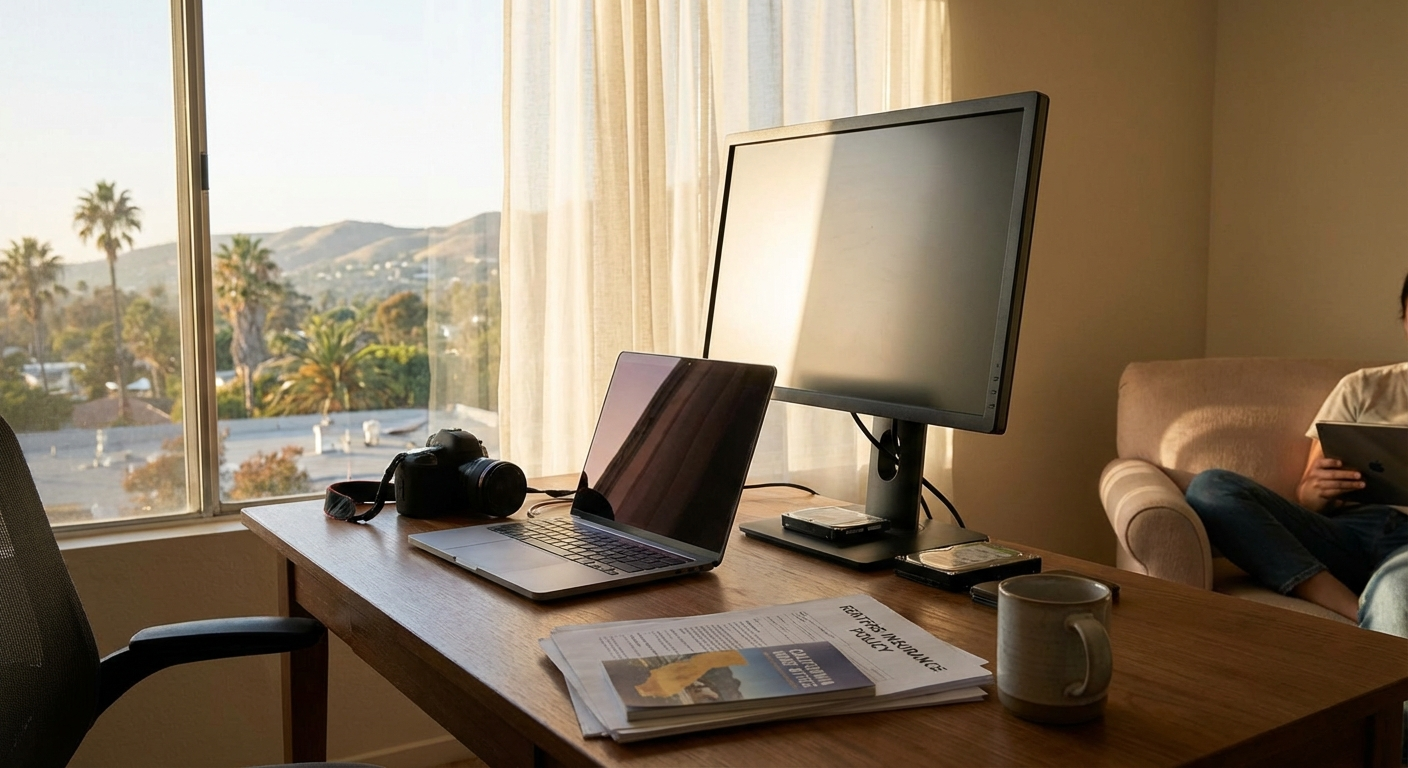
This point can’t be stressed enough: your landlord’s insurance policy covers the building itself. It covers the walls, the roof, the common areas. It does not cover your personal belongings. Not your clothes, not your furniture, and certainly not your expensive home office setup. If a fire starts in your building and destroys everything you own, your landlord’s policy won’t pay you a dime for your losses. That’s why renters insurance isn’t just a good idea; it’s a financial necessity for anyone renting in California.
Document, Document, Document!
Regardless of how much coverage you get, having an accurate inventory of your home office equipment is absolutely essential. Take photos or videos of everything. Keep receipts for big purchases. Note down serial numbers. Store this information somewhere safe, ideally in the cloud or on an external drive kept off-site. If you ever need to file a claim, this documentation will make the process much smoother and help ensure you get paid fairly for your losses.
Honestly, a quick video walkthrough with your phone once a year is better than nothing. Just pan across your desk, show the monitors, the computer tower, any expensive peripherals. It takes five minutes and could save you a huge headache.
Making a Claim: What to Expect
Nobody wants to file a claim, but if disaster strikes, knowing what to do helps. First, ensure everyone is safe. Then, if it’s a theft, call the police immediately and get a report. If it’s fire or water damage, try to prevent further damage if it’s safe to do so. Next, contact your insurance company or agent as soon as possible. They’ll guide you through the process, which will involve filling out forms and providing that invaluable inventory you wisely put together. It might take some back and forth, but a good agent can really help you through it.
Getting the Right Advice
Trying to figure out all these details on your own can feel like a puzzle. That’s where an experienced insurance agent comes in. Someone like Karl Susman at LA Renters Insurance, CA License #OB75129, has seen it all. He understands the unique challenges of the California market and can help you tailor a renters policy that truly protects your home office equipment, not just your sofa. They can walk you through the options for endorsements, scheduled property, and even earthquake coverage, making sure you don’t have any nasty surprises down the road.
Don’t leave your livelihood to chance. Protecting your home office equipment is a smart move for any remote worker or home-based business owner in California. It’s about peace of mind, knowing that if the unexpected happens, you can get back to work without a massive financial hit.
Ready to see what options are out there for protecting your California home office? Get a renters insurance quote today and make sure your workspace is covered.
Honestly, it’s a small investment for a whole lot of security. If you have questions, don’t hesitate to reach out. Karl and his team are always happy to chat about what makes the most sense for your situation. You can even call them directly at (877) 411-5200.
Think about it: that computer you’re reading this on? It’s probably a critical piece of your work. Make sure it’s protected.
Ready to protect your valuable home office gear? Click here to get a renters insurance quote and find the right coverage for your California home office.
Frequently Asked Questions About Renters Insurance and Home Office Equipment
Q: Does my employer’s insurance cover my company-issued laptop if I work from home?
A: Not always. While some employers do have policies that cover company property used off-site, it’s definitely not a given. Many employer policies might only cover the equipment while it’s in their main office, or they might have a very high deductible. It’s always best to ask your employer directly what their policy is. Even if they do cover it, your personal renters insurance with a business property endorsement can offer an extra layer of protection, especially for equipment you own yourself.
Q: What if I run a full-fledged business from my rented home? Is renters insurance enough?
A: The short answer is probably not. While renters insurance with a business property endorsement is great for remote workers or freelancers with moderate equipment, a full-fledged business with inventory, employees, or significant client traffic might need a separate business insurance policy. Renters insurance isn’t designed to cover business liabilities, lost income, or large amounts of business-specific inventory. An agent like Karl Susman can help you figure out if you’ve crossed the line from “home office” to “home-based business” needing more specialized coverage.
Q: How much does it cost to add extra coverage for my home office equipment?
A: The cost really varies. It depends on how much extra coverage you need, the type of equipment you have, and your specific insurer. Increasing your general business property limit with an endorsement is usually quite affordable – often just a few extra dollars a month. Scheduling very high-value items can be more, but it also provides more tailored protection. It’s almost always less expensive than replacing all your gear out of pocket after a loss. Your best bet is to get a personalized quote to see the actual numbers.
Q: What’s the difference between “actual cash value” and “replacement cost” coverage for my home office gear?
A: Big difference! “Actual cash value” (ACV) means the insurance company will pay you what your item is worth *today*, factoring in depreciation. So, that laptop you bought three years ago for $2,000 might only get you $800 on an ACV policy. “Replacement cost” (RCV), on the other hand, pays you what it would cost to buy a brand-new, comparable item today, without subtracting for depreciation. For expensive home office equipment, RCV is almost always what you want. It means you can actually replace your gear without coming out of pocket for the difference.
This article is for informational purposes only and does not constitute financial advice.