Your California Renters Insurance and That Sparkle: What You Need to Know About Jewelry Coverage
You’ve got that stunning engagement ring. Maybe a family heirloom watch. Or a collection of unique pieces you’ve picked up over the years. They’re more than just objects; they tell stories, hold memories, and frankly, they cost a pretty penny. So, it makes sense to wonder: does your California renters insurance actually protect them?
Honestly, most standard policies offer less protection than you’d think. It’s a bit of a shock for many. People often assume their renters policy covers everything, especially those precious items they’ve worked hard for, or inherited from family. That’s not always the case.
Your typical renters insurance policy in California does cover personal property, including jewelry. But here’s the catch: it usually comes with some serious limits. These aren’t just general policy limits; they’re specific sub-limits for certain categories of items, and jewelry is almost always one of them.
The Hard Truth About Standard Jewelry Limits
Imagine your apartment in Santa Monica gets broken into. Thieves make off with your laptop, a TV, and that gorgeous diamond necklace you got for your anniversary. Your renters policy will likely cover the laptop and TV up to your personal property limit, minus your deductible. But that necklace? That’s a different story.
Most standard renters policies in California cap jewelry coverage for theft at a surprisingly low amount. We’re talking anywhere from $1,000 to $2,500. Say your policy has a $1,500 limit for jewelry theft. That $10,000 diamond necklace? You’re only getting $1,500 back. Big difference.
This sub-limit applies specifically to theft. If your jewelry is damaged in a fire—say, a brush fire sweeps through the hills of Ventura County and destroys your rental—or ruined by water from a burst pipe, those standard sub-limits usually don’t apply. The general personal property limit would kick in, which is much higher. But theft is where most people get tripped up.
Why the difference? Insurers see theft as a higher risk for small, easily transportable, high-value items like jewelry. It’s a common claim, and these sub-limits help them manage that risk.
When Your Jewelry Needs Special Attention: Scheduling Personal Property
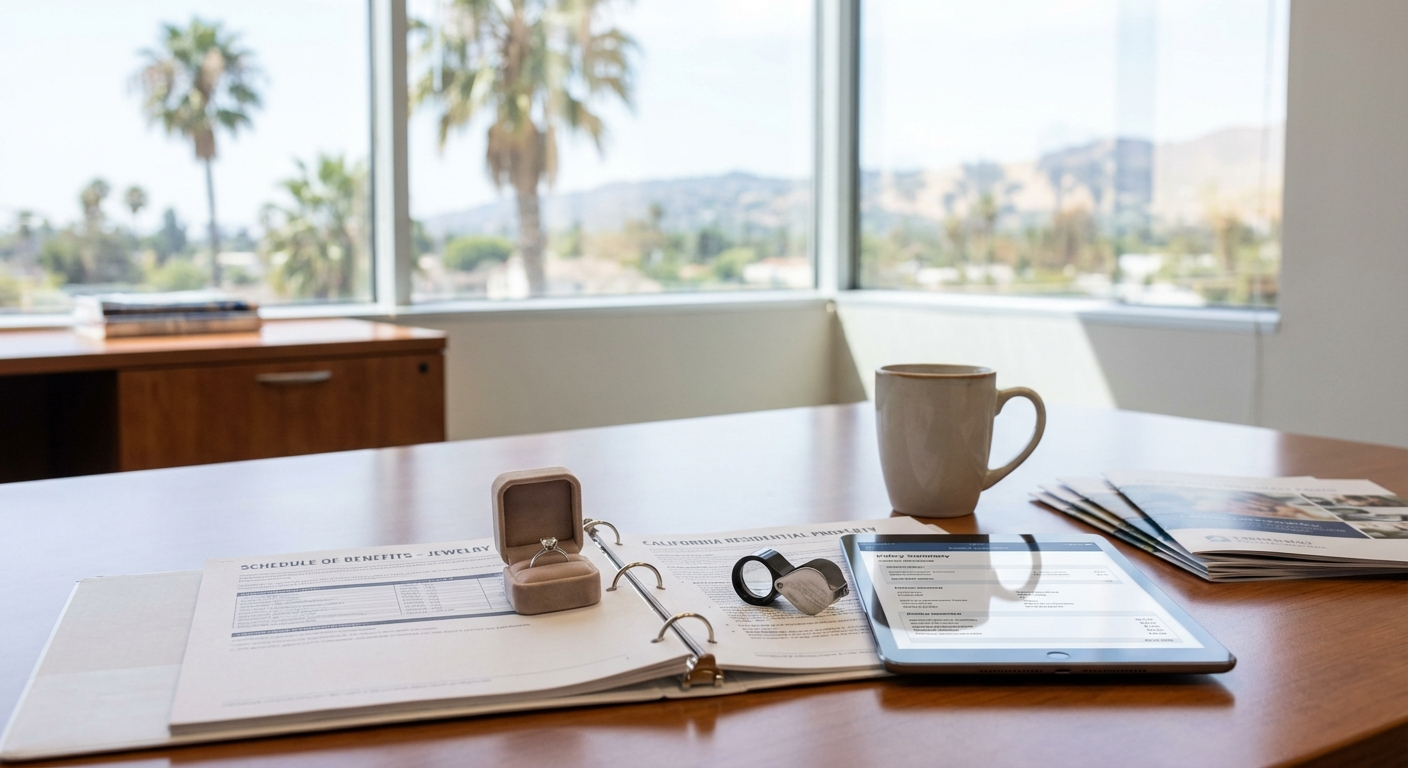
If you own jewelry worth more than your policy’s standard sub-limit for theft, you’ll want to look into “scheduling” those items. This is often called a “scheduled personal property endorsement” or a “personal articles floater.”
What does scheduling mean? It means you’re adding specific, high-value items to your policy with their own dedicated coverage amount. You’ll typically need an appraisal for each piece of jewelry you want to schedule. For example, if you have a $12,000 engagement ring, you’d get it appraised, and then schedule it for that $12,000 value. This way, if it’s stolen, lost, or damaged, you’re covered for its full appraised value, not just the paltry $1,500 sub-limit.
Here’s where it gets interesting. Scheduling an item often provides broader coverage than your standard policy. A typical renters policy covers “named perils”—things like fire, theft, vandalism, windstorm. But a scheduled item often gets “open perils” coverage, sometimes called “all-risk” coverage. This means it’s covered for almost anything that happens to it, unless specifically excluded. That includes mysterious disappearance, which is a big one for jewelry. Dropped your earring down a drain? Lost a bracelet hiking in Griffith Park? If it’s scheduled, you might be covered. Not always with a standard policy.
You’ll pay extra for this. It’s an additional premium on top of your base renters insurance. But for peace of mind, especially with a truly valuable piece, it’s usually well worth it.
The Appraisal Process: Don’t Skip This Step
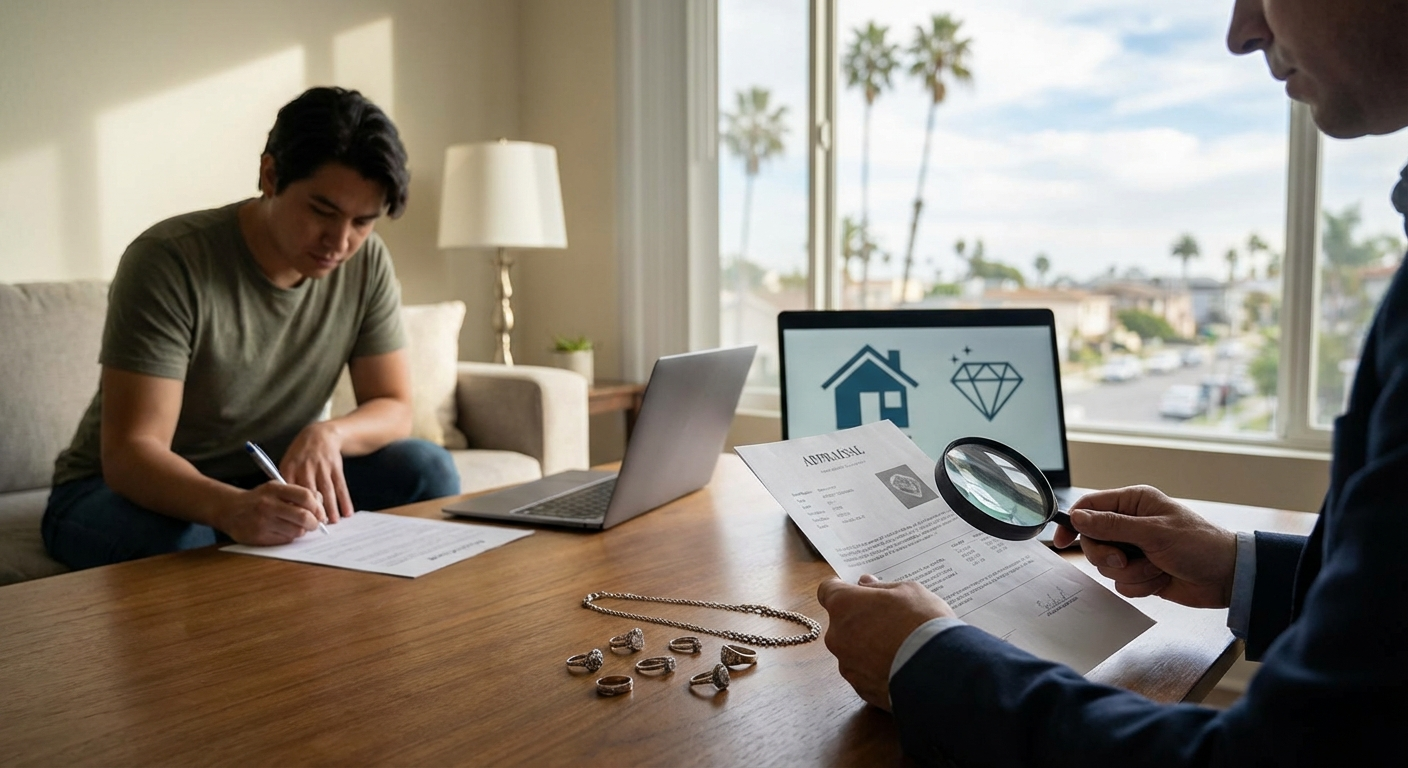
To schedule your jewelry, you’ll need a professional appraisal. This isn’t just a guess; it’s a detailed document from a certified jeweler that states the item’s current market value. Most insurers want an appraisal that’s no older than a few years—typically three to five years. Why? The value of precious metals and gemstones can fluctuate. A diamond ring appraised in 2018 might be worth more or less today.
Find a reputable jeweler, someone who specializes in appraisals. They’ll examine the piece, note its characteristics (carat weight, clarity, cut, color for diamonds; type and quality of other gemstones; metal type; craftsmanship), and provide a written valuation. Keep this appraisal safe. Your insurance company will need a copy, and you should keep one for your records.
Some people push back on this. “Do I really need to pay for an appraisal?” Yes, you do. Without it, you can’t schedule the item, and without scheduling, you’re stuck with those low sub-limits. It’s a small investment to protect a much larger one.
Replacement Cost vs. Actual Cash Value: A Key Difference
This comes up often with renters insurance, and it’s especially important for jewelry. Your policy will either pay out based on “replacement cost” or “actual cash value” (ACV).
- Actual Cash Value (ACV): This pays you what the item was worth at the time it was stolen or damaged, factoring in depreciation. That means if your five-year-old watch is stolen, you’d get its value today, not what it cost new. For jewelry, especially pieces that hold their value or appreciate, ACV can leave you short.
- Replacement Cost (RC): This pays you what it would cost to buy a brand-new, similar item today. No depreciation. Most people prefer replacement cost coverage for their personal property, and it’s almost always what you want for scheduled jewelry. You want to be able to replace that lost heirloom, not just get a depreciated fraction of its original value.
When you schedule jewelry, you’re almost always getting replacement cost coverage for that specific item. It’s one of the big advantages.
What About Deductibles?
Even with scheduled jewelry, you’ll still have a deductible. This is the amount you pay out of pocket before your insurance kicks in. If your scheduled ring is valued at $10,000 and your deductible is $500, the insurance company would pay you $9,500. Most policies let you choose your deductible, with higher deductibles usually meaning lower premiums.
For some scheduled items, especially very high-value pieces, an insurer might offer a “zero deductible” option, but that’s rare and comes with a significantly higher premium.
Getting the Right Advice in California
Navigating insurance can feel like trying to find parking in downtown LA on a Friday night—it’s complicated. That’s why talking to an experienced agent is so important. Someone like Karl Susman at LA Renters Insurance (CA License #OB75129) can walk you through the specifics of your policy and help you understand your options for jewelry coverage.
California has its own unique insurance quirks. From wildfires that threaten homes across the state, from the Inland Empire to the Valley, to higher rates of property crime in some urban areas, having the right coverage is essential. Don’t assume your policy is good enough. A quick chat with an expert can save you a lot of heartache—and money—down the road.
Think about what you own. Those diamond earrings, that Rolex, a custom-made pendant. Are they truly protected? It’s a question worth asking, and getting a real answer can make all the difference if the worst happens.
Ready to see what protecting your valuables really looks like? Get a free quote today and talk to an expert about your specific needs.
Protecting Your Sparkle: A Summary of Steps
To make sure your jewelry is properly covered by your California renters insurance:
- Review your current policy: Find the “Special Limits of Liability” section to see the sub-limit for jewelry theft.
- Inventory your jewelry: List all valuable pieces and their estimated worth. Take photos or videos.
- Get appraisals: For any piece exceeding your policy’s sub-limit, get a professional, current appraisal.
- Schedule the items: Work with your agent to add a scheduled personal property endorsement for these appraised items.
- Understand your coverage: Confirm it’s replacement cost and what perils are covered (ideally “open perils” for scheduled items).
It sounds like a few steps, but it’s really just a conversation and some paperwork. And for something as personal and valuable as your jewelry, it’s time well spent.
Don’t leave your cherished pieces to chance. Get a free renters insurance quote and ensure your valuables are truly protected.
Frequently Asked Questions About Jewelry and Renters Insurance
Q: Does my renters insurance cover jewelry I take on vacation?
Yes, most renters insurance policies offer worldwide coverage for your personal property, including jewelry. So, if your scheduled diamond necklace is stolen while you’re traveling in Europe, it would generally be covered. The same limits and deductibles would apply as if it were stolen from your rental home in San Diego.
Q: What if I lose an earring from a pair? Will my insurance cover just one?
This is where scheduling really shines. If you’ve scheduled a matching set, like a pair of diamond earrings, and one goes missing, your scheduled personal property coverage will often pay for the replacement of the entire set, or the cost to replace the lost earring with a matching one. With a standard policy, a mysterious disappearance isn’t typically covered at all.
Q: How often should I get my jewelry appraised?
It’s a good idea to get high-value jewelry reappraised every three to five years. The value of precious metals, gemstones, and even certain designer pieces can change over time. An updated appraisal ensures your scheduled coverage amount accurately reflects the item’s current worth, so you’re not underinsured if you need to make a claim.
Q: Will my renters insurance premium go up if I schedule my jewelry?
Yes, adding a scheduled personal property endorsement for your jewelry will increase your overall renters insurance premium. The cost depends on the value of the items you’re scheduling, the type of coverage (e.g., open perils), and your location. However, for many, the added cost is a small price to pay for the significantly enhanced protection and peace of mind it provides.
This article is for informational purposes only and does not constitute financial advice.